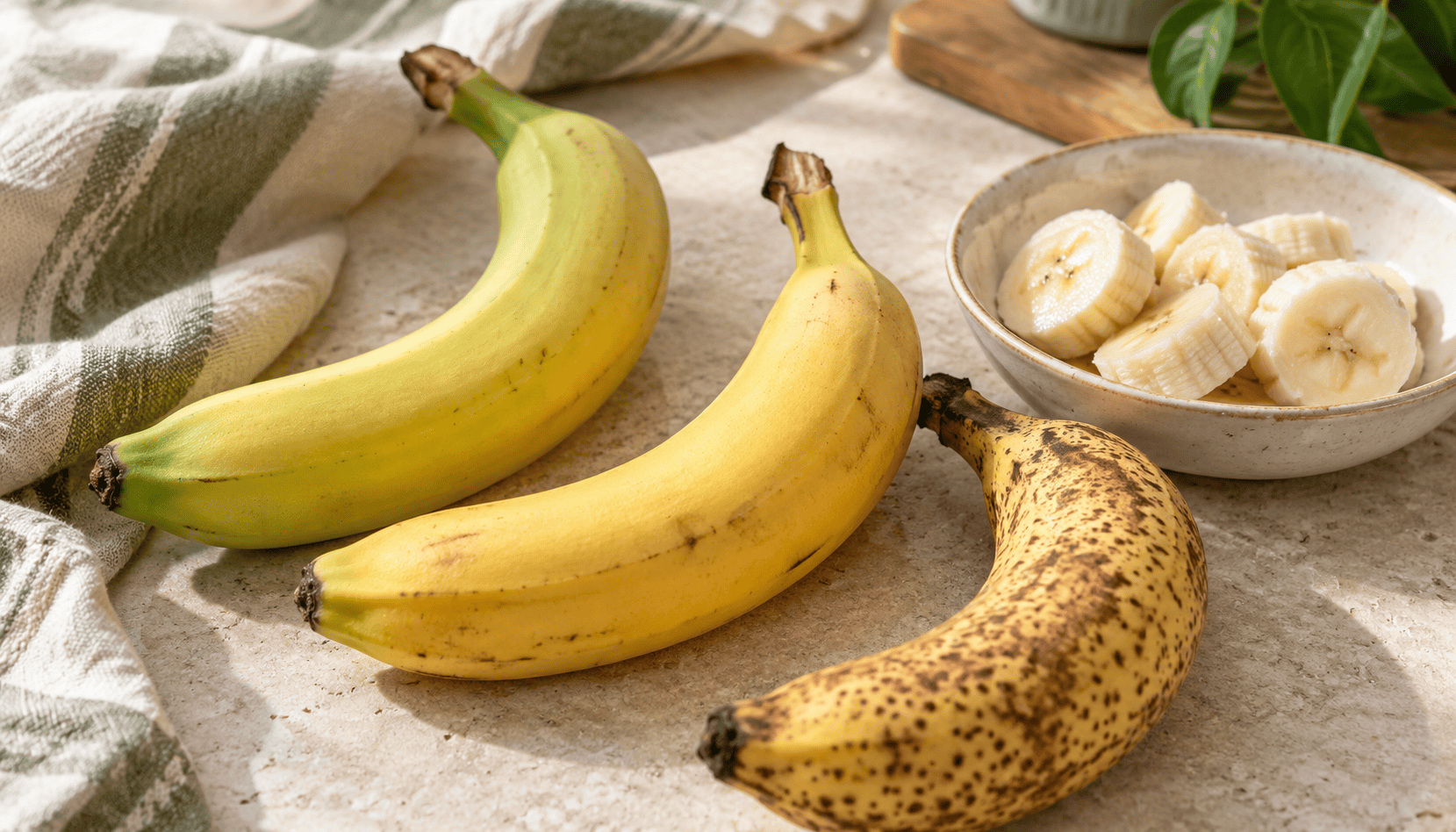
A banana that feels right for slicing over porridge may be firmer than one you want to mash for baking. Matching the fruit to its use can make grocery planning easier and help you decide what to eat, chill or freeze next.
This guide is about common yellow dessert bananas. Different varieties can look different as they ripen. Peel color offers a clue about ripeness, but it cannot establish whether a banana is safe to eat. Storage and handling matter too.
What changes as a banana ripens
During ripening, banana flesh softens and starch is converted to sugars. Aroma changes too. These are documented ripening changes described by UC Davis. That helps explain why a firmer banana and a softer one behave differently in the kitchen.
There is no need to turn this into a ranking of the healthiest banana. Choose the texture and flavor that suit what you want to make. A color chart cannot tell you an individual fruit’s sugar content or predict your body’s response to it.
Green or green tipped
These bananas are generally firmer and less ripe. If you want a sweeter, softer banana for a smoothie or baking, let it ripen at room temperature and check it regularly. Avoid promising that it will be ready tomorrow; the starting fruit and conditions will affect that.
Yellow and still firm
Consider these for eating as they are or slicing over porridge, cereal or yogurt. Use the texture you enjoy rather than waiting for a particular number of spots. When shopping for several days, you might choose fruit at different stages instead of buying a whole bunch with the same immediate use.
Speckled and softer
As the fruit softens, mashing or blending becomes a useful option. Consider it for a banana smoothie or a banana-bread recipe that specifies ripe fruit. Ripeness does not replace the recipe’s measurements: use the amount requested and follow its directions for fresh or thawed banana.
Very dark peel
Pause before assigning this fruit to the baking bowl. A dark peel can have more than one cause, including cold storage. You cannot label a banana “safe for baking” from a photograph or its color alone. Check for spoilage, consider how it was stored, and discard questionable fruit.
Counter fridge or freezer
Keep bananas that need to ripen at room temperature. Once ripe, refrigeration is an option to slow further change. Iowa State University Extension distinguishes room-temperature storage for ripening bananas from refrigerated storage for ripe ones.
The peel can darken in the refrigerator even when the flesh has not changed in the same way. Mississippi State University Extension explains this storage effect. It is another reason to avoid using peel color as a verdict. This guide gives no guaranteed number of extra days.
If you will not use ripe fruit soon, wash the outside before peeling, cut the banana into manageable pieces and pack it in an airtight freezer bag or container. Label it with the date. Frozen banana is an option for blending; for baking, follow the recipe’s thawing directions and thaw in the refrigerator when needed. Freeze fruit while it is in good condition.
Ripeness and spoilage need separate decisions
Discard bananas with mold or obvious spoilage, including a suspicious odor or leaking, deteriorating flesh. Do not taste questionable food to decide. USDA recommends discarding moldy soft produce, because contamination can extend beneath the surface.
Equally, normal appearance and smell do not guarantee safety. FDA food-storage guidance explains why harmful contamination may not be detectable that way. Keep preparation clean and refrigerate peeled or cut fruit promptly.
At your next grocery shop, think about when you will use each banana. Keep some for slicing, let others ripen for mashing, and freeze suitable extras before they become waste. Save this guide for your next bunch, and follow MyWayToCook for practical ingredient advice.
AI-created ingredient illustration; not a photograph of a tested recipe.