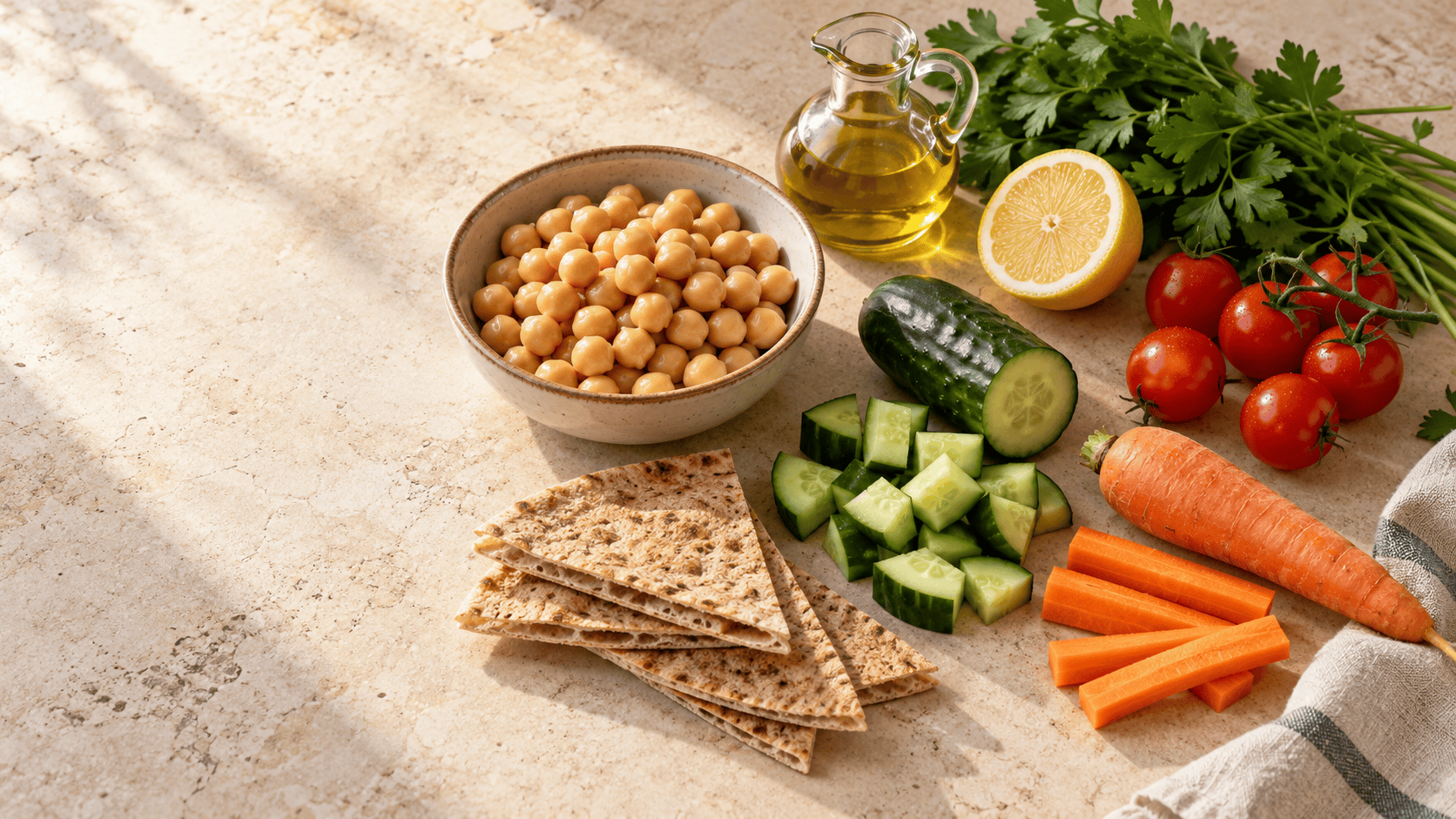
AI-created ingredient illustration; not a photograph of a tested recipe.
A lunchbox is easier to put together when you have a starting point. Choose a base, add a protein food, include vegetables, and finish with something that brings the flavors together. The same ingredients can become a pita box, a grain bowl, or a noodle lunch, depending on what you already have.
These are flexible assembly ideas for adults, rather than newly tested recipes. Use properly cooked ingredients, follow product instructions, and adjust the amount to your appetite. The formula is a packing aid, not a nutrition prescription.
Start with four parts
Choose a base such as pita, cooked couscous, noodles, or pasta. Add chickpeas, beans, cooked chicken, or prepared tofu. Bring in vegetables with a texture you enjoy: cucumber for crunch, grated carrot for bite, or cooked peppers for softness.
Finally, choose a flavor finish. Lemon and olive oil, a soy-based dressing, or a spoonful of pesto can give familiar ingredients a different direction. Pack wet sauces separately when you want the other ingredients to stay dry. A small screw-top container is useful here; check that it closes securely before placing it in your bag.
1. Lemon chickpea pita box
Gather pita wedges, drained canned chickpeas, cucumber, cherry tomatoes, parsley, lemon, and olive oil. Rinse and drain the chickpeas. Wash the vegetables and herbs, then chop them into comfortable bite-size pieces.
Toss the chickpeas with a little lemon juice, olive oil, and chopped parsley. Taste and season as you like. Pack the cucumber and tomatoes alongside, with the pita in a separate compartment. At lunch, scoop the chickpeas into the pita or eat everything as a small platter. Keep tomato juices away from the bread until you are ready to eat.
If you want to make the bread yourself, see our homemade pita bread recipe.
2. Chicken and couscous box
Start with fully cooked chicken and couscous prepared according to its packet. Add diced cucumber, grated carrot, and chopped parsley. Use lemon and olive oil for a simple dressing, or a ready-made dressing you already enjoy.
Chill the cooked ingredients before packing a cold lunch. Keep the chicken in bite-size pieces so you do not need a knife at your desk. Put the dressing in its own container and combine everything when you eat. If you have chickpeas left from the first box, they can replace the chicken for a different version.
3. Sesame tofu noodle box
Use noodles cooked according to the packet, firm tofu prepared according to its label, shredded cabbage, and carrot. Let the cooked ingredients chill promptly in the refrigerator. Cut the tofu into pieces that are easy to pick up with a fork.
In a clean bowl, combine a little soy sauce, rice vinegar, and toasted sesame oil. Taste before adding it to any food; loosen with a small splash of water if needed. Pack the dressing separately. Toss with the noodles, tofu, and vegetables at lunchtime, adding sesame seeds if you enjoy them. Check sauce labels for ingredients that do not suit your needs.
4. White bean pesto pasta box
Gather cooked pasta, drained canned white beans, cherry tomatoes, cucumber, and your preferred pesto. Rinse and drain the beans, halve the tomatoes, and cut the cucumber into small pieces.
Once the pasta is chilled, combine it with the beans and vegetables. Pack the pesto separately and stir it through at lunch. A little water can loosen a thick pesto before packing. Use the same cucumber and tomatoes from the pita box to keep the shopping list manageable. Choose a pesto whose ingredients suit you; products vary.
Keep lunch cold from home to desk
Refrigerate perishables at 40°F (4°C) or below. Pack an insulated lunch bag with at least two cold sources, then refrigerate the food when you arrive if a fridge is available. Keep it cold until lunch. FoodSafety.gov lunch-packing guidance; storage on arrival
Refrigerate cooked food promptly in shallow containers; do not wait for it to cool on the counter. Discard perishables left at room temperature longer than two hours, or one hour above 90°F (32°C). FoodSafety.gov leftovers guidance
When cooking chicken, check for 165°F (74°C) with a food thermometer. Reheated leftovers should also reach that temperature. Safe temperature chart
Save one combination you want to make first. Start there, reuse a few ingredients, and change the flavor finish when you want something different.