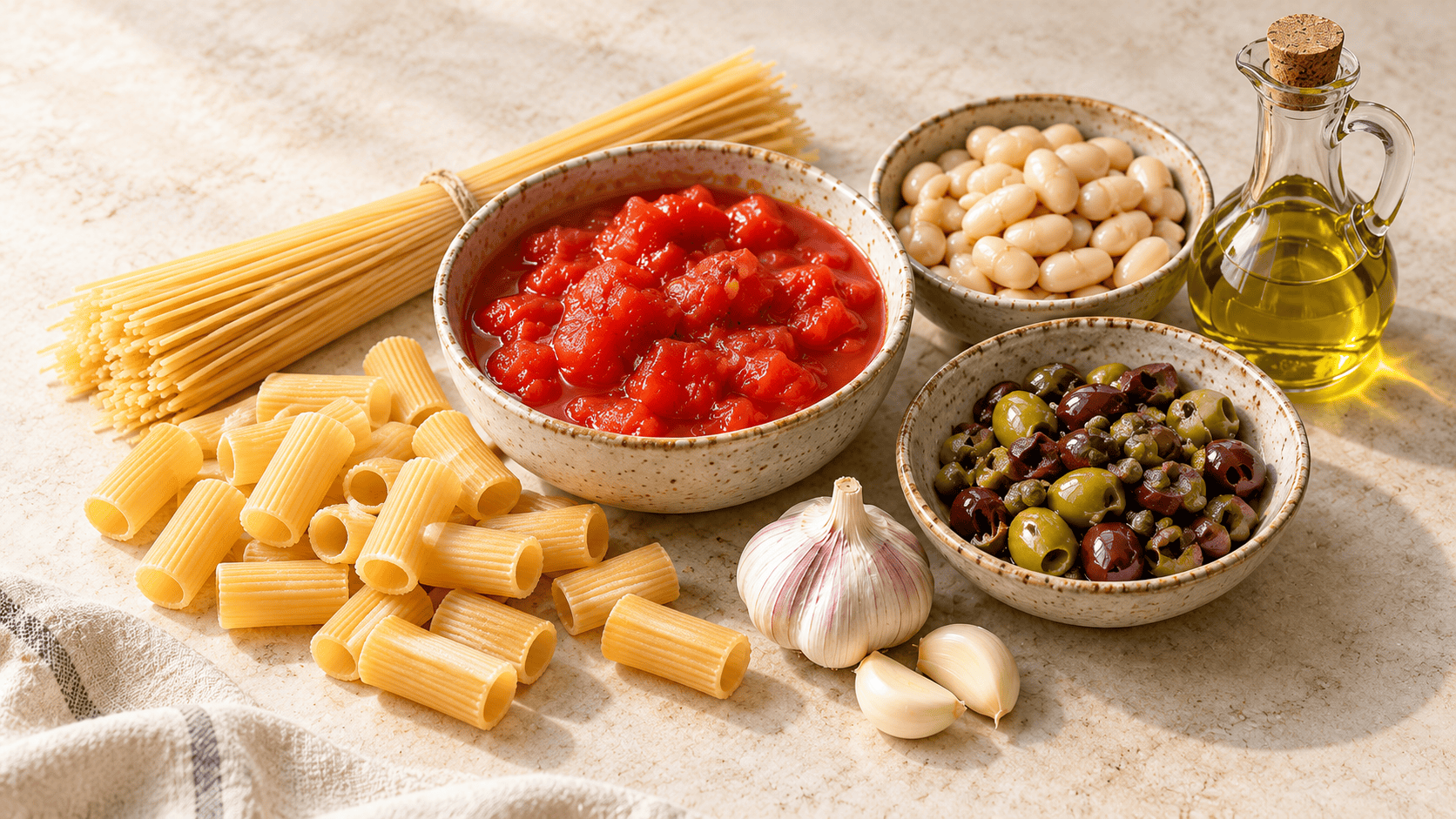
Start with the ingredient you already have open. Tomatoes can anchor a familiar red sauce; white beans can make a softer, thicker coating; olives and capers bring a salty accent; oil, garlic and chilli keep the ingredient list short. Choosing one direction first is more useful than adding a little of everything.
These are flexible cooking ideas, not four kitchen-tested recipes with fixed amounts or timing. Use them to plan dinner, adjust by taste and texture, or choose a measured recipe. The practical goal is a sauce that coats your pasta without leaving it dry or swimming in liquid.
Tomato and oregano
Choose this when you have tinned chopped tomatoes or passata, olive oil and dried oregano. Warm the oil, add the tomato base and oregano, then let the mixture simmer until it has the consistency you want. Stir and reduce the heat if it starts catching. Garlic is optional; if you use it, gently soften it in the oil before adding tomatoes.
Taste before adding salt, especially if your tomatoes are already seasoned. Chilli flakes are an optional heat direction. Keep the first version simple so you can judge what the tomato base actually needs. Fresh herbs or grated cheese can finish the plate if they are already in your fridge; they are not required for this cupboard-first idea.
Tomato with olives and capers
Use the tomato direction as a base, then add chopped pitted olives and drained capers. Their strong flavor means you can begin with a small addition, stir and taste before using more. Check again before adding salt. Keep the olives chopped small enough to distribute through the pasta.
This is a flexible briny tomato combination rather than a claim to an authentic named sauce. If you want heat, choose chilli flakes; if you prefer it mild, leave them out. You do not need to buy a new spice blend to make the direction distinct.
White bean and black pepper
Choose canned white beans when you want a thicker sauce direction. Drain and rinse them, then mash or blend with olive oil and a little water until spoonable. Warm the mixture gently and loosen it as you toss it with cooked pasta. Add black pepper, and taste before choosing any salt or acid.
Mashed beans give a more textured result than a blender. Neither version should be promised as identical to a cream sauce. Add water gradually rather than pouring in a large amount at once. Lemon juice is an optional fresh finish, not a requirement for the pantry version.
Garlic oil and chilli
Choose this direction when you have olive oil, sound garlic cloves and chilli flakes. Gently warm the garlic in oil; avoid letting it turn very dark. Add the chilli and combine with the pasta and a little reserved cooking water. Toss thoroughly, then add more water only if the pasta still looks dry.
Make this for the meal you are cooking. A homemade jar of garlic in oil is not a shelf-stable pantry product. Oregon State University Extension advises refrigerating untreated garlic in oil for no more than four days or freezing it. Do not leave it at room temperature for storage.
Adjust the texture before adding more ingredients
Before draining pasta, save some of its cooking water in a heatproof cup. Barilla’s pasta-water guidance explains that the water brings moisture and released starch, which can help the sauce coat the pasta. Add it a little at a time while tossing. Different sauces and pasta shapes need different amounts.
If the dish is dry, a small splash of water may be enough. If the sauce is watery, stop adding liquid and allow it to reduce gently, taking care not to overcook the pasta. Taste after combining: capers, olives, canned ingredients and salted pasta water can all change the seasoning.
Shop for options and put leftovers away promptly
A compact shopping list is dried pasta, tinned tomatoes, canned white beans, olive oil, dried oregano, chilli flakes, black pepper, olives and capers. Add garlic if you will use it. Check what is already open before buying another jar, and follow storage directions on each product after opening.
Refrigerate cooked leftovers in shallow containers within two hours, or within one hour when the temperature is above 32°C/90°F. Use refrigerated leftovers within three to four days, following USDA leftover guidance. Reheat leftovers to 74°C/165°F; bring reheated sauces to a rolling boil. These cooked sauces are not home-canning recipes.
Save the four directions for your next cupboard check. For a measured dish, browse the MyWayToCook recipe index and choose a recipe that fits your ingredients.
AI-created ingredient illustration; not a photograph of a tested recipe.